
Choosing Curtains for a Victorian Bay Window
Why Victorian Bays Need a Different Approach
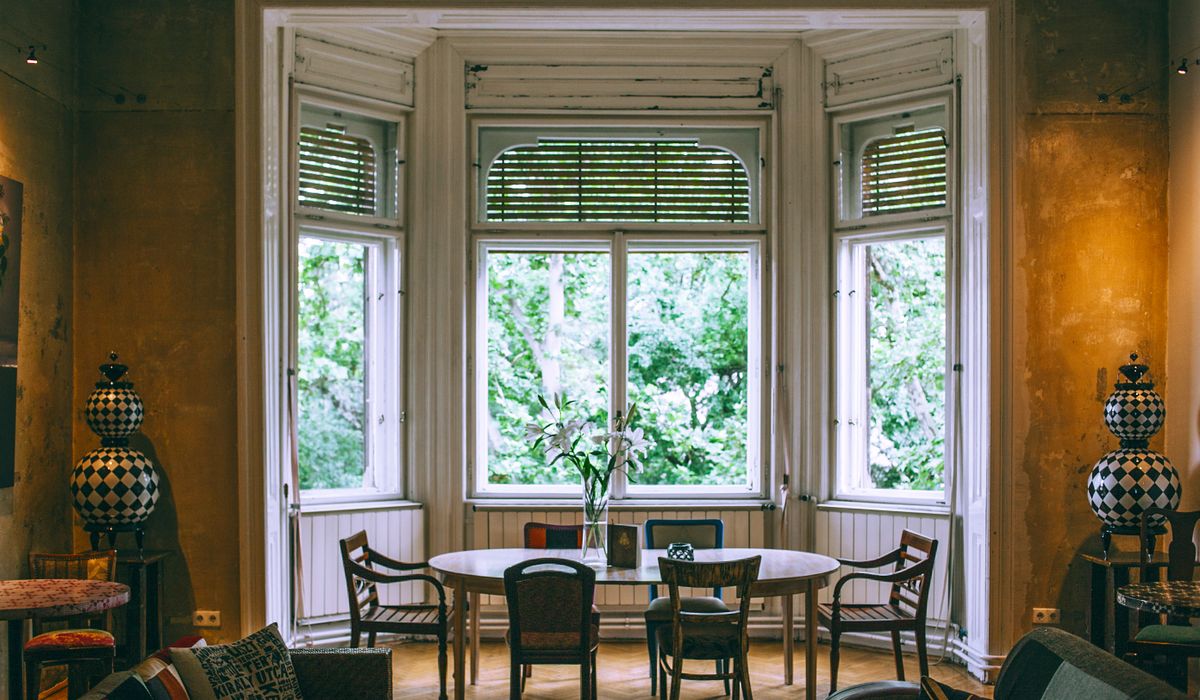
A bay window is usually the best feature in a Victorian room — three sides of glass, deep reveals, and often a good bit of ceiling height above. It is also the single most awkward place in the house to hang curtains. A straight pole fitted across the opening will cut off the bay entirely, flattening the very thing that gives the room its shape. Dress it well and the bay becomes a generous, light-filled alcove. Get it wrong and you have a heavy wall of fabric that swallows the light and makes the room feel smaller.
The good news is that the rules are not complicated. They are mostly about recognising that a bay has angles, and that angles need to be measured, planned and dressed rather than guessed at.
Tracks, Poles and Getting Round the Angles
For most Victorian bays — the canted, three-sided kind — a bendable curtain track is the right answer. It follows the shape of the bay, bends neatly at each corner and allows the curtains to be drawn right back into the recess. Look for a track that can take a bend radius of around 5cm per corner; tighter bends cause the runners to snag.
- Wall-fixed or ceiling-fixed? Ceiling fixing is tidier where there is a deep cornice or a picture rail you don't want to break into, and it gains you a little extra height. Wall fixing sits more naturally in rooms with plain walls.
- Corded or hand-drawn? A corded track is worth the extra cost in a bay, as reaching behind the stack to pull curtains shut is fiddly. On a wide bay, consider a double track — one cord each side.
- Poles can work, but usually only on square bays or on a bay where you plan to keep the curtains open on either side. Where you do use a pole, add a return back to the wall at each end so the curtains close properly and no light leaks in at the edges.
How Much Fullness — and Where the Fabric Stacks
Fullness is the measurement most often got wrong in a bay. As a rule of thumb, allow 2–2.25 times the track width for pencil pleat heading, and 2.25–2.5 times for pinch pleat or triple pleat. Anything under 1.75 times will look mean and hang in flat, lifeless folds.
Then think about the stack — the bundle of fabric when the curtains are open. In a bay, this matters more than anywhere else, because a bulky stack sits in front of the glass and blocks light. Aim for a stack of no more than 20–25cm per side, and check that the track extends far enough into the recess to accommodate it. If the bay is narrow, fewer, wider pleats will serve you better than many small ones.
Choosing a Hem Length
Hem length sets the whole character of the finished window. In a bay, three drops of slightly different lengths will look uneven, so measure each drop separately — floors and ceilings in Victorian houses are rarely level.
- Sill length: 1–2cm below the sill. Practical and neat, good where a radiator or window seat sits underneath.
- Below sill: 10–15cm beneath the sill. A forgiving option that softens the window without a long drop to keep clean.
- Floor length: finish 1–2cm above the floor, or let the fabric kiss the floor with a 5mm clearance. Breaks and puddles suit formal rooms but collect dust and look tired quickly.
Where a radiator sits in the bay, floor-length curtains will trap heat and can discolour over time. Sill-length or below-sill is the sensible choice there, or fit a window seat and treat the bay as a separate zone.
Fabric, Lining and Period Details
Victorian rooms tend to have tall ceilings and generous proportions, which means curtains can carry a little more weight than they would in a modern box. Mid-weight fabrics — wool blends, heavy linens, cotton velvets, and good-quality prints — hang well and hold a pleat. Very light fabrics in a bay can look flimsy and are harder to draw.
Lining is not optional if you want a polished result. A cotton or poly-cotton lining protects the face fabric from sunlight and adds body; interlining adds bulk and draught-proofing; a thermal lining is worth considering in north-facing bays or draughty sashes. Traditional details — a small pelmet, a deep heading, tiebacks — should be used sparingly, as a bay already has plenty going on.
Measuring and Fitting Without the Headache
Measure the track position, not the existing pole or the window frame. Run the tape along the line the track will actually follow, allowing a wall return at each end of around 8–10cm so the curtains can close past the edges of the glass. Take the width at the top of the bay, the middle and the bottom — old bays splay and rarely match.
Check for sloping ceilings, cornicing and the depth of the reveal before ordering brackets, and remember that a corded track needs a clear run for the cord to the side of the bay. Finally, steam or lightly press the curtains before hanging and let them settle for a few days — the pleats will drop and the whole bay will suddenly look as though it was always meant to be there.


Neutral living rooms feel richer when you mix wool, linen, jute and velvet. Discover how to combine textures without making the space feel busy.
Narrow living rooms can still feel balanced and sociable. These layout ideas cover sofa placement, walkways and focal points for long, thin spaces.
Rented homes often limit major changes, but lighting, artwork and removable wallpaper can add personality. Learn practical ways to make the space your own.
A calm bedroom starts with a restrained colour palette and soft textures. Explore gentle greens, warm whites and muted pinks for a restful atmosphere.